
Turning on Your Metabolic Switch: How Fasting Changes Your Body's Fuel
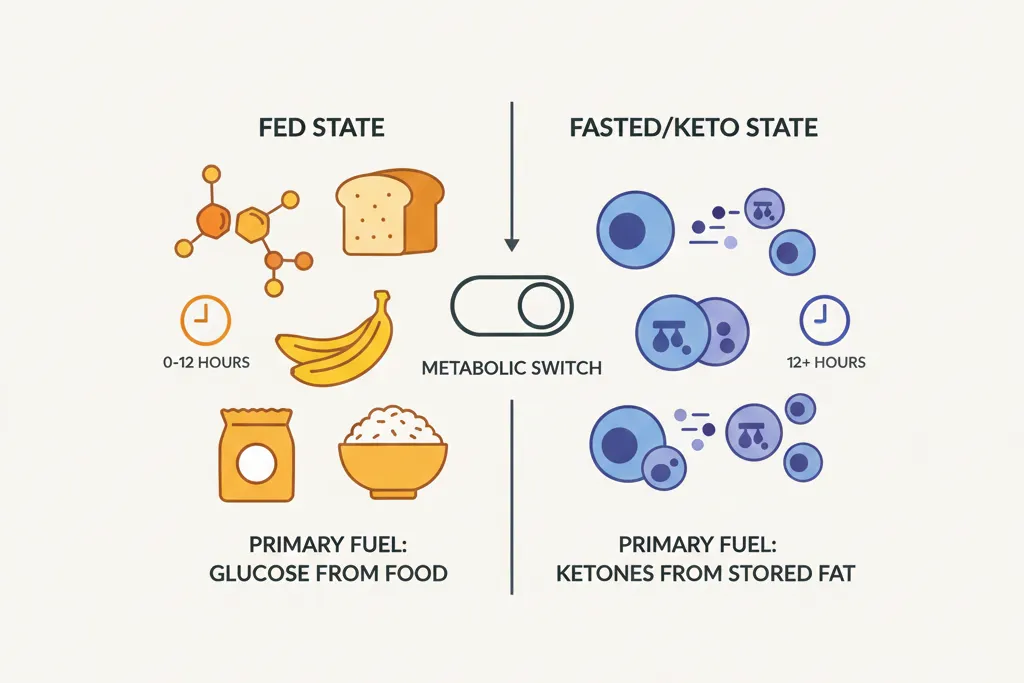
Your body is like a car with two different fuel tanks. Most of the time, it runs on one type of fuel. But when that runs out, it can switch to a backup fuel. This switch can help you lose weight and feel better. Scientists call this "flipping the metabolic switch."
How Your Body Gets Energy
When you eat a meal, your body breaks down the food into sugar called glucose. This glucose goes into your blood. Your cells use this sugar for energy. It's like putting gas in your car's tank.
This works great when you eat regularly throughout the day. Your body always has fresh glucose to use. But what happens when you don't eat for a long time?
The Metabolic Switch
Think about a power plant that usually burns coal. When the coal runs out, it switches to burning natural gas instead. Your body does something similar.
When you haven't eaten for several hours, your body runs out of glucose. It needs to find another source of energy. So it turns to the fat stored in your cells.
Your body breaks down this fat into something called fatty acids. These fatty acids travel through your blood to your cells. Your cells then turn these fatty acids into molecules called ketones.
Ketones become your new fuel source. This is what scientists mean by "flipping the metabolic switch." Your body switches from burning sugar to burning fat.
How Long Does It Take?
The switch doesn't flip instantly. It takes time for your body to use up its glucose and start making ketones.
Usually, you need to go without eating for at least 12 hours before ketone levels in your blood get high enough. For some people, it might take even longer.
This is why the switch often happens overnight while you sleep. If you eat dinner at 7 PM and don't eat breakfast until 7 AM, that's 12 hours. Your body starts making ketones during those hours.
Why Ketones Are Better Fuel
You might wonder why it matters what fuel your body uses. Isn't energy just energy?
Not exactly. Ketones are actually a cleaner fuel than glucose. When your cells burn ketones, they produce fewer harmful byproducts.
These byproducts are called metabolic disruptors. They're like the exhaust from a car. Some fuels create more pollution than others. Ketones create less "pollution" in your body.
These metabolic disruptors can damage your cells over time. They create what scientists call oxidative stress. This stress can lead to inflammation and speed up aging.
By using ketones instead of glucose, your cells work more efficiently. They produce the energy you need with less damage. It's like having a cleaner-burning engine.
What Happens in Your Body
When you flip the metabolic switch, several good things happen:
Your body starts burning stored fat for energy. This is why fasting can help with weight loss. You're literally using up your fat stores.
Your cells get a break from constantly processing glucose. This gives them time to clean up and repair themselves. Scientists call this process autophagy. It's like your cells are taking out the trash.
Inflammation in your body goes down. Remember those metabolic disruptors? Fewer of them means less inflammation.
Your brain gets a boost. Ketones are actually a great fuel for your brain. Many people report feeling more clear-headed when their body is using ketones.
Your insulin levels drop. Insulin is the hormone that helps your cells absorb glucose. When you're not eating, your body doesn't need as much insulin. This gives your pancreas a rest.
Alternate Day Fasting
Some scientists suggest using alternate day fasting to flip this switch regularly. This means you eat normally one day, then eat very little or nothing the next day.
On fasting days, your body runs out of glucose. It has to switch to burning fat and making ketones. On eating days, you go back to using glucose.
By doing this back and forth, you train your body to be flexible. It gets better at switching between fuels. This is called metabolic flexibility.
Studies show that alternate day fasting can lead to weight loss. People lose fat without harming their health. In fact, many health markers improve.
Time-Restricted Eating
Another way to flip the switch is time-restricted eating. This means you only eat during a certain window each day.
For example, you might eat all your meals between noon and 8 PM. That's an 8-hour eating window. The other 16 hours, you don't eat anything.
During those 16 hours without food, your body uses up its glucose. Then it switches to burning fat and making ketones. You flip the switch every single day.
Many people find this easier than alternate day fasting. You still get to eat every day. You just limit when you eat.
Is This Safe?
You might worry that not eating for long periods is unhealthy. Won't you starve? Won't your body shut down?
The answer is no. Your body is designed to handle periods without food. For most of human history, people didn't have constant access to food. Our bodies evolved to store fat and use it when needed.
The metabolic switch is a natural process. It's not dangerous for most healthy people. In fact, it can be very beneficial.
However, fasting isn't right for everyone. Pregnant women shouldn't fast. Neither should children or teenagers who are still growing. People with certain medical conditions need to be careful too.
If you have diabetes, low blood sugar, or an eating disorder, talk to your doctor before trying any type of fasting. Some medications need to be taken with food.
What to Expect
When you first start fasting, you might feel hungry. This is normal. Your body is used to getting food regularly. It takes time to adjust.
You might also feel tired or irritable at first. Some people get headaches. These symptoms usually go away after a few days as your body adapts.
Once your body gets used to flipping the switch, many people report feeling great. They have more energy. Their minds feel clearer. They don't get as hungry between meals.
Making It Work
If you want to try flipping your metabolic switch, start slowly. Don't jump into long fasts right away.
Try extending the time between dinner and breakfast. Instead of eating breakfast at 7 AM, wait until 9 or 10 AM. This gives you a few extra hours of fasting.
Stay hydrated. Drink plenty of water during fasting periods. You can also have black coffee or plain tea. These don't break your fast.
On eating days, focus on healthy foods. Don't use eating time as an excuse to binge on junk food. Fill up on vegetables, fruits, whole grains, and lean proteins.
Listen to your body. If you feel dizzy, weak, or unwell, eat something. Fasting should make you feel better, not worse.
The Science Behind It
Researchers at the University of Florida and other institutions have studied this metabolic switch. They published findings in the journal Obesity and other scientific publications.
Their research shows that flipping the switch has real health benefits. People lose weight, especially body fat. Inflammation markers in their blood go down. Their cells become healthier.
The key is giving your body enough time without food to truly switch fuels. Twelve hours is the minimum. Some people benefit from even longer fasting periods.
Beyond Weight Loss
While many people try fasting for weight loss, the benefits go beyond just dropping pounds.
Flipping the metabolic switch may help protect against diseases. Studies suggest it could lower the risk of diabetes, heart disease, and even some cancers.
It might help your brain stay healthy as you age. Some research shows it could protect against Alzheimer's disease and other brain conditions.
It can improve your relationship with food. When you're not eating all the time, you become more aware of true hunger versus boredom or habit.
The Bottom Line
Your body has two fuel sources: glucose from food and ketones from fat. By going without food for 12 or more hours, you flip a metabolic switch. Your body stops burning glucose and starts burning fat.
This switch produces ketones, a cleaner fuel that creates less damage to your cells. It can help you lose weight, reduce inflammation, and improve your health.
Alternate day fasting and time-restricted eating are two ways to flip this switch regularly. Both have been shown to work in scientific studies.
This isn't a quick fix or a fad diet. It's working with your body's natural systems. You're using the way your body was designed to work.
Of course, fasting isn't magic. You still need to eat healthy foods when you do eat. You still need to exercise and take care of yourself in other ways.
But understanding and using your metabolic switch can be a powerful tool. It's one more way to take control of your health.
If you're interested in trying this approach, start small. Extend your overnight fast by a few hours. See how you feel. Talk to your doctor, especially if you have any health conditions.
Remember, the goal isn't to never eat. It's to give your body regular breaks from eating. During those breaks, you flip the switch and let your body burn fat for fuel.
This simple change can have big effects on your weight, your energy, and your long-term health. Your body knows how to flip this switch. You just need to give it the time to do so.


