




Choose the Right Path for Your Goals
Whether you want daily accountability, a comprehensive program, one-on-one coaching, or need expert guidance for your organization, I have options that fit where you are right now.
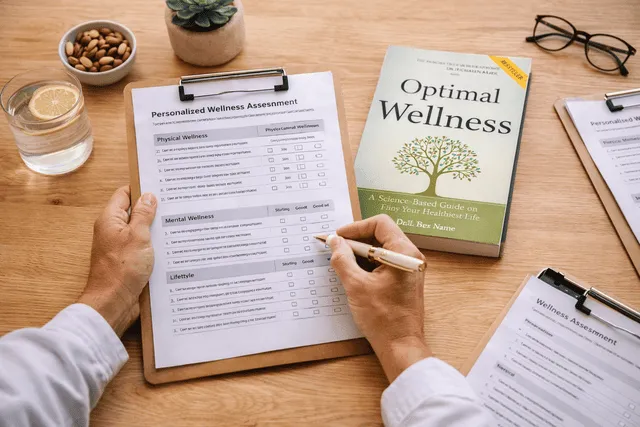
Start Free: The Optimal Wellness Plan
Not sure which service is right for you? Start here.
Get a free personalized wellness assessment that shows you exactly where you stand and what to focus on first. Includes my bestselling Optimal Wellness Book with simple, science-backed strategies you can start using today.
Best for: Everyone. This is the perfect starting point.
Popular Blogs

Is Intermittent Fasting an Eating Disorder? The Important Differences Explained
Some people worry that intermittent fasting is just another eating disorder. They see people skipping meals and wonder if this is healthy. Is intermittent fasting the same as binge eating disorder? Let's clear up the confusion.
Dr. Stephen Anton is a researcher who studies eating patterns. He explains the important differences between intermittent fasting and eating disorders like binge eating disorder.
We All Fast Every Day
First, let's understand something important. Everyone fasts every single day. You fast when you sleep at night. This is why your first meal is called breakfast. You are breaking your fast.
Intermittent fasting is not some strange or mystical practice. It simply means being thoughtful about when you start eating and when you stop eating each day.
The real question is not whether to fast. The question is how long should your fast be? When should you eat your first meal? When should you eat your last meal?
What Is Binge Eating Disorder?
Binge eating disorder is a serious mental health condition. It is very different from intermittent fasting.
When someone has binge eating disorder, they eat a very large amount of food in a short time. They eat much faster than normal. They eat until they feel uncomfortably full.
Most importantly, they feel out of control. They cannot stop eating even when they want to. They often eat in secret because they feel ashamed.
After a binge, they usually feel guilty, disgusted, or depressed. But they keep doing it over and over. They cannot control this behavior.
This is not at all what intermittent fasting is about.
What Is Intermittent Fasting?
Intermittent fasting is a planned eating pattern. You choose specific times to eat and specific times not to eat.
The most common approach is called time restricted eating. You eat all your food within an eight hour window. For example, you might eat between noon and 8 PM. Then you fast from 8 PM until noon the next day.
This is done on purpose. It is planned. You are in control of when you eat. You are not eating huge amounts of food. You are not eating in secret. You do not feel out of control.
The Key Differences
Let's look at the main differences between intermittent fasting and binge eating disorder.
Control is the biggest difference. With intermittent fasting, you are in control. You choose when to eat. With binge eating disorder, you feel out of control. You cannot stop yourself from eating.
Planning is another difference. Intermittent fasting is planned ahead of time. You know when your eating window will be. Binge eating happens suddenly and feels uncontrollable.
Amount of food is different too. With intermittent fasting, you eat normal amounts of food during your eating window. With binge eating disorder, you eat huge amounts of food very quickly.
Feelings are very different. Intermittent fasting should make you feel good. You should have energy. You should feel in control. Binge eating makes you feel ashamed, guilty, and out of control.
Social behavior is different. People who do intermittent fasting can be flexible with their eating times. They can adjust for social events. People with binge eating disorder often eat alone in secret.
Flexibility Is Important
Dr. Anton makes an important point about flexibility. Intermittent fasting should not make you avoid social situations.
If you are so rigid about your eating times that you cannot go to dinner with friends, that is a problem. If you cannot go on a date because it is outside your eating window, that is not healthy.
Healthy intermittent fasting includes flexibility. Maybe you usually stop eating at 6 PM. But you have a dinner party at 7 PM on Saturday. That is okay. You can adjust. You can be flexible.
Being flexible does not mean you failed. It means you are living a normal, healthy life. Intermittent fasting should fit into your life, not control your life.
When Does It Become a Problem?
Sometimes intermittent fasting can become unhealthy. Here are warning signs to watch for.
You refuse to eat outside your window even for important events. You skip family gatherings, dates, or social events because of your eating schedule. You feel extreme anxiety if you eat outside your window. You are losing too much weight too fast. You think about food constantly in an obsessive way. You feel guilty or ashamed when you eat. You hide your eating patterns from others. Your relationships suffer because of your eating schedule.
If you notice these signs, you might be developing an unhealthy relationship with food. This is different from healthy intermittent fasting. Talk to a doctor or therapist if you see these warning signs.
The Social Benefits of Intermittent Fasting
Many people find that intermittent fasting actually helps their social life. This might sound surprising, but here is why.
When you eat all your food in a shorter time window, you can eat more at each meal. Let's say you usually eat three meals a day. Each meal might be smaller because you need to spread your calories across three meals.
But if you only eat two meals a day during an eight hour window, each meal can be bigger. This means when you go out to dinner with friends, you can enjoy a full meal. You do not have to count every calorie. You have more room in your eating budget.
Dr. Anton says most people he works with actually like this aspect. They can go to restaurants and eat normally. They can enjoy social meals without stress.
Listen to Your Body and Mind
The most important thing is to pay attention to how intermittent fasting affects you mentally and emotionally.
Do you feel good? Do you have energy? Do you feel in control? Can you be flexible when needed? Do you enjoy your life? Can you maintain relationships?
If yes, then intermittent fasting is probably working well for you.
Do you feel anxious all the time? Do you avoid social situations? Do you feel guilty when you eat? Do you feel out of control? Are your relationships suffering?
If yes, then something is wrong. You might need to change your approach or stop intermittent fasting completely.
Who Should Not Try Intermittent Fasting?
Some people should not do intermittent fasting at all. This includes anyone who has ever had an eating disorder.
If you have a history of anorexia, bulimia, or binge eating disorder, intermittent fasting could trigger old patterns. The focus on controlling when you eat might be too similar to disordered eating behaviors.
Even if you are recovered, talk to your doctor and therapist before trying intermittent fasting. They can help you decide if it is safe for you.
If you have never had an eating disorder but you have a tendency to be very rigid or obsessive about food, be careful. Intermittent fasting might not be the best choice for you.
A Healthy Approach
If you want to try intermittent fasting in a healthy way, here are some guidelines.
Start slowly. Do not jump into a strict schedule right away. Gradually increase your fasting window over time.
Be flexible. Plan to adjust your eating times for social events, holidays, and special occasions. Life should not revolve around your eating window.
Eat enough. During your eating window, make sure you eat enough calories and nutrients. Intermittent fasting is not about starving yourself.
Check in with yourself regularly. How do you feel? Are you happy? Are you healthy? Can you maintain this long term?
Stay social. Do not let your eating schedule isolate you from friends and family. If it does, something is wrong.
Talk to professionals. If you have any concerns, talk to a doctor, dietitian, or therapist. They can help you do this safely.
The Bottom Line
Intermittent fasting and binge eating disorder are completely different. Binge eating disorder is a serious mental health condition where people feel out of control. They eat huge amounts of food and feel ashamed.
Intermittent fasting is a planned eating pattern where you control when you eat. You eat normal amounts of food. You stay flexible for social situations.
The key is control. With healthy intermittent fasting, you are in control. With binge eating disorder, you feel out of control.
Intermittent fasting should make your life better, not worse. It should give you energy and help you feel good. It should not isolate you from friends and family.
If intermittent fasting is making you anxious, obsessive, or antisocial, stop. Talk to a healthcare professional. There are many ways to be healthy. Find the approach that works for you without harming your mental health or relationships.
Remember, everyone fasts every night. Intermittent fasting is just being thoughtful about extending that natural fast. Done right, with flexibility and balance, it can be a healthy choice for many people.
How I Help You Age Better
I've organized everything I offer around five core areas. You probably need help in more than one of these areas - most people do. The good news is if you improve in one area, you are likely to see improvements in other areas.

More Energy & Better Metabolism
You want to wake up ready to go, not drag through the day. This is about optimizing how your body processes food and fuel. Better metabolism means better energy, easier weight control, and stronger physical performance.
Brain Health & Sharp Thinking
Protecting your brain and maintaining your mental clarity as you age isn't something that happens by accident. It requires specific nutrition, sleep habits, movement, and lifestyle strategies specific to brain health. I'll show you exactly what works.
Stay Strong & Move Without Pain
Maintaining muscle, balance, and mobility is what allows you to live a full life and stay independent as you age. Whether it’s hiking, skiing, playing with your kids (or grandkids) or just moving through your day without stiffness - this matters.
Recovery & Physical Resilience
Your body needs proper recovery to stay healthy. This includes good quality sleep, stress management, and movement strategies that help you bounce back faster.
Purpose & Peace of Mind
Physical health is part of the equation. So is feeling like you're in control of your future, living with purpose, and knowing you're doing the right things at the right times.
How I Help You Age Better
I've organized everything I offer around five core areas. You probably need help in more than one of these areas - most people do. The good news is if you improve in one area, you are likely to see improvements in other areas.
Alpha Max Test 3D

All-natural testosterone booster I formulated with the one and only Funk Roberts.
The Better Fit Mask

My preferred facemask for protection and comfort. Use code: DRANTON for 10% off.
Individual Services

90-Day Optimal Wellness Accountability Program
A 90-day email and text series that walks you through the four core pillars of the Optimal Wellness Book. Daily education, actionable steps, built-in accountability.
Best for: People who want structure, daily guidance, and quick results.
Healthy Aging Mastery Program

A comprehensive online course with video modules, workbooks, and 100% customized meal plans. You answer questions about your preferences—the program builds itself around your life.
Best for: People ready for a complete system with personalized meal plans and deep learning.

Personalized Coaching for Healthy Aging
One-on-one coaching where we build a personalized strategy for your specific situation. Regular check-ins, direct access, and accountability from someone who understands your goals.
Best for: People who want direct access, personalized guidance, and one-on-one accountability.
Choosing the Right Service

Individual Looking to Improve Health?
Quick results & structure → 90-Day Program
Comprehensive system → Mastery Program
Personalized guidance → Coaching
Organization?
Inspire your team → Keynote or Workshop
Strategic guidance & credibility → Advisory or Research
Not Sure?
to discuss what's best for you.
Recent Blogs
Is Intermittent Fasting an Eating Disorder? The Important Differences Explained
Some people worry that intermittent fasting is just another eating disorder. They see people skipping meals and wonder if this is healthy. Is intermittent fasting the same as binge eating disorder? Let's clear up the confusion.
Dr. Stephen Anton is a researcher who studies eating patterns. He explains the important differences between intermittent fasting and eating disorders like binge eating disorder.
We All Fast Every Day
First, let's understand something important. Everyone fasts every single day. You fast when you sleep at night. This is why your first meal is called breakfast. You are breaking your fast.
Intermittent fasting is not some strange or mystical practice. It simply means being thoughtful about when you start eating and when you stop eating each day.
The real question is not whether to fast. The question is how long should your fast be? When should you eat your first meal? When should you eat your last meal?
What Is Binge Eating Disorder?
Binge eating disorder is a serious mental health condition. It is very different from intermittent fasting.
When someone has binge eating disorder, they eat a very large amount of food in a short time. They eat much faster than normal. They eat until they feel uncomfortably full.
Most importantly, they feel out of control. They cannot stop eating even when they want to. They often eat in secret because they feel ashamed.
After a binge, they usually feel guilty, disgusted, or depressed. But they keep doing it over and over. They cannot control this behavior.
This is not at all what intermittent fasting is about.
What Is Intermittent Fasting?
Intermittent fasting is a planned eating pattern. You choose specific times to eat and specific times not to eat.
The most common approach is called time restricted eating. You eat all your food within an eight hour window. For example, you might eat between noon and 8 PM. Then you fast from 8 PM until noon the next day.
This is done on purpose. It is planned. You are in control of when you eat. You are not eating huge amounts of food. You are not eating in secret. You do not feel out of control.
The Key Differences
Let's look at the main differences between intermittent fasting and binge eating disorder.
Control is the biggest difference. With intermittent fasting, you are in control. You choose when to eat. With binge eating disorder, you feel out of control. You cannot stop yourself from eating.
Planning is another difference. Intermittent fasting is planned ahead of time. You know when your eating window will be. Binge eating happens suddenly and feels uncontrollable.
Amount of food is different too. With intermittent fasting, you eat normal amounts of food during your eating window. With binge eating disorder, you eat huge amounts of food very quickly.
Feelings are very different. Intermittent fasting should make you feel good. You should have energy. You should feel in control. Binge eating makes you feel ashamed, guilty, and out of control.
Social behavior is different. People who do intermittent fasting can be flexible with their eating times. They can adjust for social events. People with binge eating disorder often eat alone in secret.
Flexibility Is Important
Dr. Anton makes an important point about flexibility. Intermittent fasting should not make you avoid social situations.
If you are so rigid about your eating times that you cannot go to dinner with friends, that is a problem. If you cannot go on a date because it is outside your eating window, that is not healthy.
Healthy intermittent fasting includes flexibility. Maybe you usually stop eating at 6 PM. But you have a dinner party at 7 PM on Saturday. That is okay. You can adjust. You can be flexible.
Being flexible does not mean you failed. It means you are living a normal, healthy life. Intermittent fasting should fit into your life, not control your life.
When Does It Become a Problem?
Sometimes intermittent fasting can become unhealthy. Here are warning signs to watch for.
You refuse to eat outside your window even for important events. You skip family gatherings, dates, or social events because of your eating schedule. You feel extreme anxiety if you eat outside your window. You are losing too much weight too fast. You think about food constantly in an obsessive way. You feel guilty or ashamed when you eat. You hide your eating patterns from others. Your relationships suffer because of your eating schedule.
If you notice these signs, you might be developing an unhealthy relationship with food. This is different from healthy intermittent fasting. Talk to a doctor or therapist if you see these warning signs.
The Social Benefits of Intermittent Fasting
Many people find that intermittent fasting actually helps their social life. This might sound surprising, but here is why.
When you eat all your food in a shorter time window, you can eat more at each meal. Let's say you usually eat three meals a day. Each meal might be smaller because you need to spread your calories across three meals.
But if you only eat two meals a day during an eight hour window, each meal can be bigger. This means when you go out to dinner with friends, you can enjoy a full meal. You do not have to count every calorie. You have more room in your eating budget.
Dr. Anton says most people he works with actually like this aspect. They can go to restaurants and eat normally. They can enjoy social meals without stress.
Listen to Your Body and Mind
The most important thing is to pay attention to how intermittent fasting affects you mentally and emotionally.
Do you feel good? Do you have energy? Do you feel in control? Can you be flexible when needed? Do you enjoy your life? Can you maintain relationships?
If yes, then intermittent fasting is probably working well for you.
Do you feel anxious all the time? Do you avoid social situations? Do you feel guilty when you eat? Do you feel out of control? Are your relationships suffering?
If yes, then something is wrong. You might need to change your approach or stop intermittent fasting completely.
Who Should Not Try Intermittent Fasting?
Some people should not do intermittent fasting at all. This includes anyone who has ever had an eating disorder.
If you have a history of anorexia, bulimia, or binge eating disorder, intermittent fasting could trigger old patterns. The focus on controlling when you eat might be too similar to disordered eating behaviors.
Even if you are recovered, talk to your doctor and therapist before trying intermittent fasting. They can help you decide if it is safe for you.
If you have never had an eating disorder but you have a tendency to be very rigid or obsessive about food, be careful. Intermittent fasting might not be the best choice for you.
A Healthy Approach
If you want to try intermittent fasting in a healthy way, here are some guidelines.
Start slowly. Do not jump into a strict schedule right away. Gradually increase your fasting window over time.
Be flexible. Plan to adjust your eating times for social events, holidays, and special occasions. Life should not revolve around your eating window.
Eat enough. During your eating window, make sure you eat enough calories and nutrients. Intermittent fasting is not about starving yourself.
Check in with yourself regularly. How do you feel? Are you happy? Are you healthy? Can you maintain this long term?
Stay social. Do not let your eating schedule isolate you from friends and family. If it does, something is wrong.
Talk to professionals. If you have any concerns, talk to a doctor, dietitian, or therapist. They can help you do this safely.
The Bottom Line
Intermittent fasting and binge eating disorder are completely different. Binge eating disorder is a serious mental health condition where people feel out of control. They eat huge amounts of food and feel ashamed.
Intermittent fasting is a planned eating pattern where you control when you eat. You eat normal amounts of food. You stay flexible for social situations.
The key is control. With healthy intermittent fasting, you are in control. With binge eating disorder, you feel out of control.
Intermittent fasting should make your life better, not worse. It should give you energy and help you feel good. It should not isolate you from friends and family.
If intermittent fasting is making you anxious, obsessive, or antisocial, stop. Talk to a healthcare professional. There are many ways to be healthy. Find the approach that works for you without harming your mental health or relationships.
Remember, everyone fasts every night. Intermittent fasting is just being thoughtful about extending that natural fast. Done right, with flexibility and balance, it can be a healthy choice for many people.
All Services Include
Evidence-based approach (everything backed by research).
Practical, actionable strategies (not theory).
Clear communication (no jargon or overcomplicated language).
Focused on results (you should feel and see the difference).
Respect for your time and intelligence.

What People Say
I wasn't sure which program was right, so I had a consultation. Stephen listened to my situation and recommended the Mastery Program. That guidance made all the difference.
— Sarah, 52
The keynote gave us a completely different perspective on what's possible as we age. Now our whole team is approaching health differently.
— Dave, Corporate Wellness Director
Working with Stephen one-on-one changed my approach. He explained the why, which made me actually commit to the changes.
— Michael, 58

About
Stephen Anton PhD in Clinical and Health Psychology, University of Florida 25+ years researching longevity and healthy aging. Published in NEJM, JAMA, American Journal of Clinical Nutrition, and more. Recognized expert in intermittent fasting, metabolism, and cardiovascular health
© Copyright 2026 | All Rights Reserved Dr. Stephen Anton | Terms & Conditions
This information is for educational purposes only and is not a substitute for personalized medical advice. Please consult your physician before making changes to your health routine.