




Choose the Right Path for Your Goals
Whether you want daily accountability, a comprehensive program, one-on-one coaching, or need expert guidance for your organization, I have options that fit where you are right now.
Start Free: The Optimal Wellness Plan
Not sure which service is right for you? Start here.
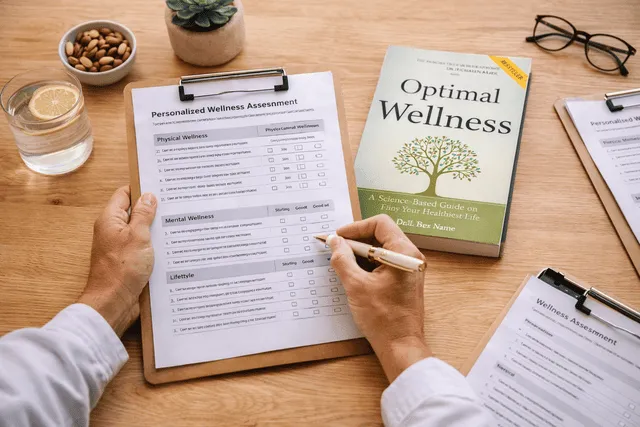
Get a free personalized wellness assessment that shows you exactly where you stand and what to focus on first. Includes my bestselling Optimal Wellness Book with simple, science-backed strategies you can start using today.
Best for: Everyone. This is the perfect starting point.
Popular Blogs
Fat Loss vs Muscle Loss: How Different Fasting Methods Compare
When you lose weight, what are you actually losing? Is it fat or muscle? The answer depends on how you lose the weight. Different methods give you different results.
Dr. Stephen Anton has studied how different eating patterns affect body composition. He explains the important differences between time restricted eating, alternate day fasting, and regular calorie restriction.
What Happens with Regular Calorie Restriction
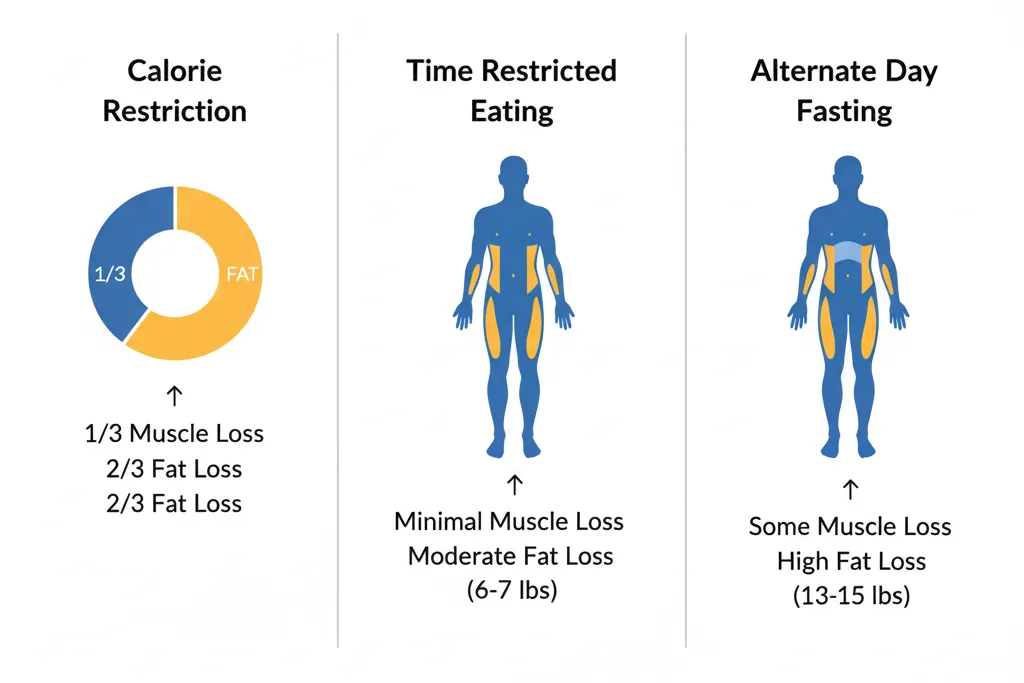
When people cut calories to lose weight, they lose both fat and muscle. About one third of the weight they lose comes from muscle. Two thirds comes from fat.
This means if you lose 30 pounds by cutting calories, about 10 pounds will be muscle and 20 pounds will be fat. Losing that much muscle is a problem.
Why does this matter? Muscle keeps your metabolism high. It helps you burn calories all day long, even when you are resting. When you lose muscle, your metabolism slows down. This makes it harder to keep weight off.
Time Restricted Eating: The Muscle Protector
Time restricted eating means you eat all your food within a short window each day. Most people fast for 14 to 18 hours and eat during a 6 to 10 hour window.
For example, you might eat only between noon and 8 PM. That gives you 16 hours of fasting and 8 hours of eating. You do this every single day.
Here is the important part. During your eating window, you eat the same number of calories your body needs. You are not cutting calories. You are just eating them in a shorter time frame.
What happens to your body composition? Dr. Anton reviewed multiple studies. The results are clear. People who do time restricted eating lose fat but do not lose significant amounts of muscle.
This is very different from calorie restriction. You lose the fat you want to lose. But you keep the muscle you want to keep.
On average, people doing time restricted eating lose about 3 kilograms of fat. That is about 6 to 7 pounds. They lose this fat without losing muscle.
Alternate Day Fasting: More Fat Loss, Some Muscle Loss
Alternate day fasting is different. You fast every other day. On fasting days, you eat very little or nothing. On eating days, you eat normally.
Dr. Anton reviewed 10 clinical trials on alternate day fasting. What did he find? People lose more total weight with this approach. They lose about 6 to 7 kilograms. That is about 13 to 15 pounds.
But there is a catch. With alternate day fasting, you do lose some muscle along with the fat. Not as much muscle as with regular calorie restriction. But more than with time restricted eating.
So you have to make a choice. Do you want to lose more weight total, even if some of it is muscle? Or do you want to protect your muscle and lose less weight total?
Understanding the Trade-Offs
Let's break this down with simple numbers. These are averages from the studies Dr. Anton reviewed.
With time restricted eating, you might lose 6 to 7 pounds. Almost all of it will be fat. You keep your muscle.
With alternate day fasting, you might lose 13 to 15 pounds. Most of it will be fat. But some will be muscle.
With regular calorie restriction, you might lose 30 pounds. But 10 pounds of that will be muscle. Only 20 pounds will be fat.
Which is best? It depends on your goals and your situation.
Who Should Choose Time Restricted Eating
Time restricted eating is probably best for most people. Here is why.
You keep your muscle. This keeps your metabolism strong. It helps you maintain your weight loss long term. You look more toned and fit because you are losing fat but keeping muscle.
Time restricted eating is also easier to stick with. You do the same thing every day. It becomes a habit. You do not have to deal with full fasting days.
If you are older, time restricted eating is especially important. As you age, you naturally lose muscle. This is called sarcopenia. You do not want to speed up this process by losing more muscle through your diet.
If you exercise regularly, especially if you do strength training, time restricted eating helps you keep the muscle you work hard to build.
If you want to maintain your strength and energy, time restricted eating is the better choice.
Who Might Choose Alternate Day Fasting
Some people might prefer alternate day fasting despite the muscle loss. Here are situations where it might make sense.
If you need to lose a lot of weight quickly for health reasons, alternate day fasting gives faster results. The extra weight loss might be worth losing a little muscle.
If you are very overweight, losing some muscle might not be as big of a concern. You have more fat to lose. The health benefits of losing that fat might outweigh the concerns about muscle loss.
If you find it easier psychologically to have full fasting days followed by normal eating days, this pattern might work better for you. Some people prefer this all-or-nothing approach.
But even in these situations, you need to be careful about muscle loss. Try to eat enough protein on your eating days. Do strength training to protect your muscle.
How Long Before Muscle Breaks Down?
A common question people ask is: how many hours of fasting before your body starts breaking down muscle?
The good news is that your body does not immediately start eating your muscle when you fast. Your body is smart. It preferentially burns fat for energy during a fast.
When you fast, your body switches to burning fat and making ketones. Ketones are a clean fuel source that comes from your fat stores. Your body uses these ketones for energy instead of breaking down muscle.
This is why time restricted eating with a 14 to 18 hour fast does not cause significant muscle loss. Your body has plenty of time to burn fat without needing to break down muscle.
Even with alternate day fasting, where you fast for 24 hours or more, your body still tries to preserve muscle. But after longer fasts, some muscle breakdown can occur. This is why alternate day fasting shows more muscle loss than time restricted eating.
The Role of Protein
One way to protect your muscle during any type of fasting is to eat enough protein during your eating window.
Protein gives your body the building blocks it needs to maintain and repair muscle. If you do not eat enough protein, your body might break down muscle to get the amino acids it needs.
Aim to eat protein at each meal during your eating window. Good sources include meat, fish, eggs, dairy, beans, and legumes. If you exercise, you might need even more protein.
The Role of Exercise
Exercise, especially strength training, is crucial for protecting muscle during weight loss.
When you lift weights or do bodyweight exercises, you send a signal to your body that you need your muscle. Your body responds by trying to preserve or even build muscle.
Without this signal, your body might think you do not need all that muscle. It might allow muscle to break down more easily.
Try to do strength training at least two or three times per week. This can be lifting weights at a gym, doing bodyweight exercises at home, or using resistance bands.
Making Your Choice
So which approach should you choose? Here are some guidelines.
Choose time restricted eating if you want to lose fat while keeping all your muscle. This is best for most people, especially if you are older, if you exercise regularly, or if you want to maintain your strength and metabolism.
Choose alternate day fasting if you need to lose more weight total and faster results are more important to you than preserving every bit of muscle. This might make sense if you are very overweight and your doctor recommends faster weight loss.
With either approach, eat enough protein and do strength training. These two things help protect your muscle no matter which fasting method you choose.
Listen to Your Body
Pay attention to how you feel and how your body is changing. The scale only tells part of the story.
Take measurements of your waist, hips, arms, and legs. Notice how your clothes fit. Pay attention to your strength in the gym. These things tell you whether you are losing fat or muscle.
If you notice you are getting weaker, you might be losing too much muscle. You might need to shorten your fasting window, eat more protein, or add more strength training.
If you are maintaining or gaining strength while losing weight, that is a great sign. You are probably losing fat while keeping muscle.
The Bottom Line
Different fasting methods affect your body composition in different ways. Time restricted eating helps you lose fat without losing muscle. Alternate day fasting helps you lose more weight total but includes some muscle loss.
For most people, time restricted eating is the better choice. You lose fat, keep muscle, and maintain a strong metabolism. This makes it easier to keep weight off long term.
Whatever method you choose, eat enough protein and do strength training. These protect your muscle and help you get the body composition you want.
Your goal should not just be to lose weight. Your goal should be to lose fat while keeping or building muscle. This is what makes you look good, feel strong, and stay healthy long term.
How I Help You Age Better
I've organized everything I offer around five core areas. You probably need help in more than one of these areas - most people do. The good news is if you improve in one area, you are likely to see improvements in other areas.

More Energy & Better Metabolism
You want to wake up ready to go, not drag through the day. This is about optimizing how your body processes food and fuel. Better metabolism means better energy, easier weight control, and stronger physical performance.
Brain Health & Sharp Thinking
Protecting your brain and maintaining your mental clarity as you age isn't something that happens by accident. It requires specific nutrition, sleep habits, movement, and lifestyle strategies specific to brain health. I'll show you exactly what works.
Stay Strong & Move Without Pain
Maintaining muscle, balance, and mobility is what allows you to live a full life and stay independent as you age. Whether it’s hiking, skiing, playing with your kids (or grandkids) or just moving through your day without stiffness - this matters.
Recovery & Physical Resilience
Your body needs proper recovery to stay healthy. This includes good quality sleep, stress management, and movement strategies that help you bounce back faster.
Purpose & Peace of Mind
Physical health is part of the equation. So is feeling like you're in control of your future, living with purpose, and knowing you're doing the right things at the right times.
How I Help You Age Better
I've organized everything I offer around five core areas. You probably need help in more than one of these areas - most people do. The good news is if you improve in one area, you are likely to see improvements in other areas.
Alpha Max Test 3D
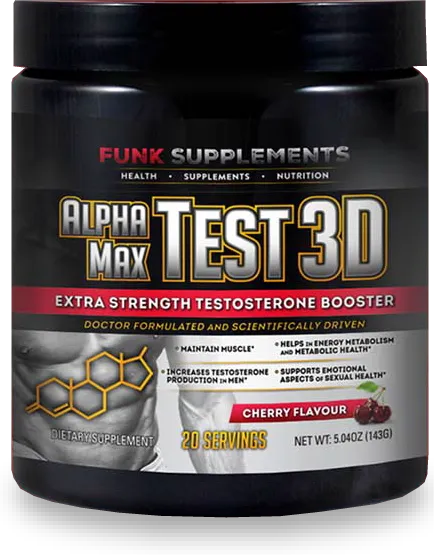
All-natural testosterone booster I formulated with the one and only Funk Roberts.
The Better Fit Mask
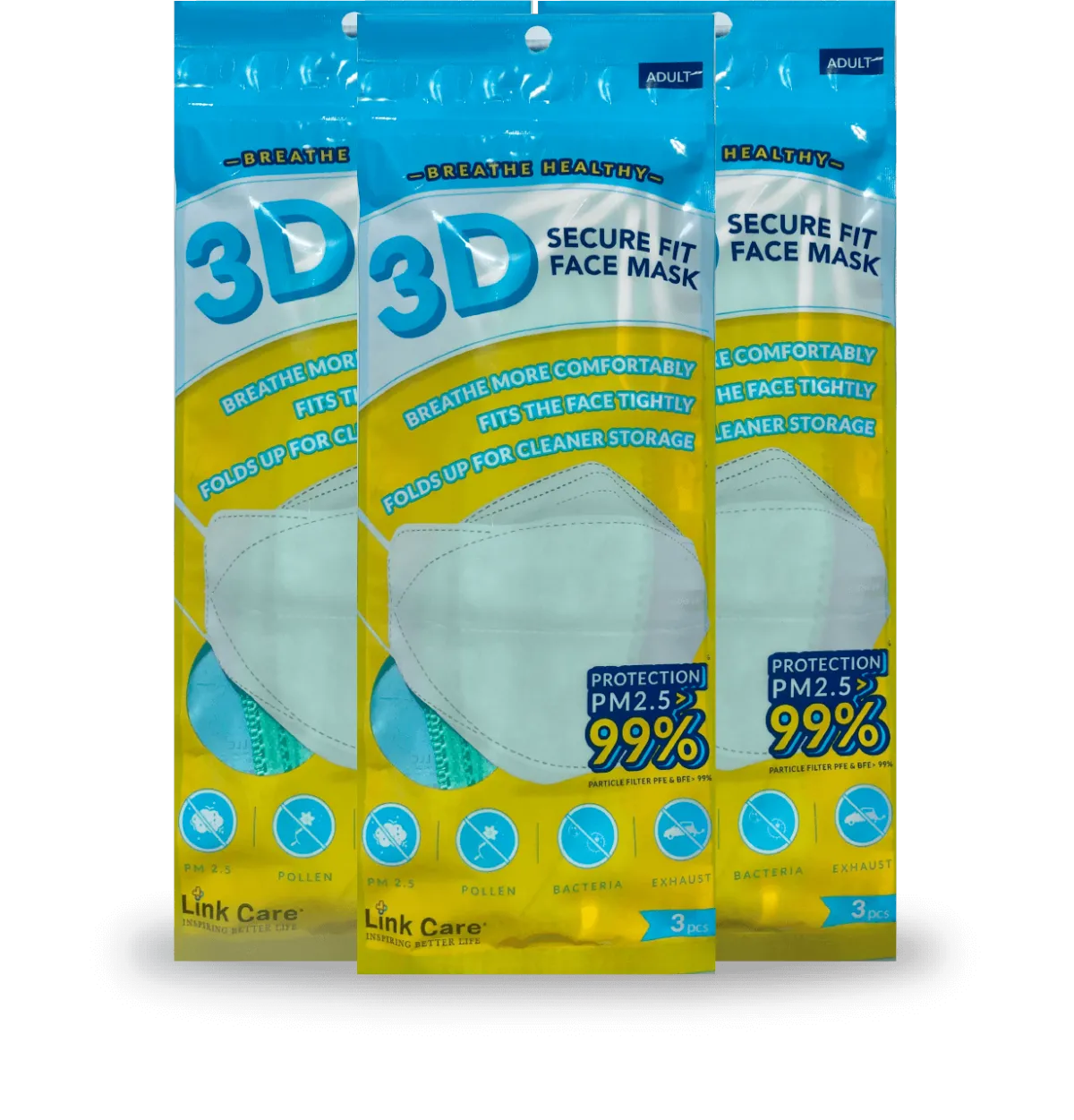
My preferred facemask for protection and comfort. Use code: DRANTON for 10% off.
Individual Services

90-Day Optimal Wellness Accountability Program
A 90-day email and text series that walks you through the four core pillars of the Optimal Wellness Book. Daily education, actionable steps, built-in accountability.
Best for: People who want structure, daily guidance, and quick results.
Healthy Aging Mastery Program

A comprehensive online course with video modules, workbooks, and 100% customized meal plans. You answer questions about your preferences—the program builds itself around your life.
Best for: People ready for a complete system with personalized meal plans and deep learning.

Personalized Coaching for Healthy Aging
One-on-one coaching where we build a personalized strategy for your specific situation. Regular check-ins, direct access, and accountability from someone who understands your goals.
Best for: People who want direct access, personalized guidance, and one-on-one accountability.
Choosing the Right Service

Individual Looking to Improve Health?
Quick results & structure → 90-Day Program
Comprehensive system → Mastery Program
Personalized guidance → Coaching
Organization?
Inspire your team → Keynote or Workshop
Strategic guidance & credibility → Advisory or Research
Not Sure?
to discuss what's best for you.
Recent Blogs
Fat Loss vs Muscle Loss: How Different Fasting Methods Compare
When you lose weight, what are you actually losing? Is it fat or muscle? The answer depends on how you lose the weight. Different methods give you different results.
Dr. Stephen Anton has studied how different eating patterns affect body composition. He explains the important differences between time restricted eating, alternate day fasting, and regular calorie restriction.
What Happens with Regular Calorie Restriction
When people cut calories to lose weight, they lose both fat and muscle. About one third of the weight they lose comes from muscle. Two thirds comes from fat.
This means if you lose 30 pounds by cutting calories, about 10 pounds will be muscle and 20 pounds will be fat. Losing that much muscle is a problem.
Why does this matter? Muscle keeps your metabolism high. It helps you burn calories all day long, even when you are resting. When you lose muscle, your metabolism slows down. This makes it harder to keep weight off.
Time Restricted Eating: The Muscle Protector
Time restricted eating means you eat all your food within a short window each day. Most people fast for 14 to 18 hours and eat during a 6 to 10 hour window.
For example, you might eat only between noon and 8 PM. That gives you 16 hours of fasting and 8 hours of eating. You do this every single day.
Here is the important part. During your eating window, you eat the same number of calories your body needs. You are not cutting calories. You are just eating them in a shorter time frame.
What happens to your body composition? Dr. Anton reviewed multiple studies. The results are clear. People who do time restricted eating lose fat but do not lose significant amounts of muscle.
This is very different from calorie restriction. You lose the fat you want to lose. But you keep the muscle you want to keep.
On average, people doing time restricted eating lose about 3 kilograms of fat. That is about 6 to 7 pounds. They lose this fat without losing muscle.
Alternate Day Fasting: More Fat Loss, Some Muscle Loss
Alternate day fasting is different. You fast every other day. On fasting days, you eat very little or nothing. On eating days, you eat normally.
Dr. Anton reviewed 10 clinical trials on alternate day fasting. What did he find? People lose more total weight with this approach. They lose about 6 to 7 kilograms. That is about 13 to 15 pounds.
But there is a catch. With alternate day fasting, you do lose some muscle along with the fat. Not as much muscle as with regular calorie restriction. But more than with time restricted eating.
So you have to make a choice. Do you want to lose more weight total, even if some of it is muscle? Or do you want to protect your muscle and lose less weight total?
Understanding the Trade-Offs
Let's break this down with simple numbers. These are averages from the studies Dr. Anton reviewed.
With time restricted eating, you might lose 6 to 7 pounds. Almost all of it will be fat. You keep your muscle.
With alternate day fasting, you might lose 13 to 15 pounds. Most of it will be fat. But some will be muscle.
With regular calorie restriction, you might lose 30 pounds. But 10 pounds of that will be muscle. Only 20 pounds will be fat.
Which is best? It depends on your goals and your situation.
Who Should Choose Time Restricted Eating
Time restricted eating is probably best for most people. Here is why.
You keep your muscle. This keeps your metabolism strong. It helps you maintain your weight loss long term. You look more toned and fit because you are losing fat but keeping muscle.
Time restricted eating is also easier to stick with. You do the same thing every day. It becomes a habit. You do not have to deal with full fasting days.
If you are older, time restricted eating is especially important. As you age, you naturally lose muscle. This is called sarcopenia. You do not want to speed up this process by losing more muscle through your diet.
If you exercise regularly, especially if you do strength training, time restricted eating helps you keep the muscle you work hard to build.
If you want to maintain your strength and energy, time restricted eating is the better choice.
Who Might Choose Alternate Day Fasting
Some people might prefer alternate day fasting despite the muscle loss. Here are situations where it might make sense.
If you need to lose a lot of weight quickly for health reasons, alternate day fasting gives faster results. The extra weight loss might be worth losing a little muscle.
If you are very overweight, losing some muscle might not be as big of a concern. You have more fat to lose. The health benefits of losing that fat might outweigh the concerns about muscle loss.
If you find it easier psychologically to have full fasting days followed by normal eating days, this pattern might work better for you. Some people prefer this all-or-nothing approach.
But even in these situations, you need to be careful about muscle loss. Try to eat enough protein on your eating days. Do strength training to protect your muscle.
How Long Before Muscle Breaks Down?
A common question people ask is: how many hours of fasting before your body starts breaking down muscle?
The good news is that your body does not immediately start eating your muscle when you fast. Your body is smart. It preferentially burns fat for energy during a fast.
When you fast, your body switches to burning fat and making ketones. Ketones are a clean fuel source that comes from your fat stores. Your body uses these ketones for energy instead of breaking down muscle.
This is why time restricted eating with a 14 to 18 hour fast does not cause significant muscle loss. Your body has plenty of time to burn fat without needing to break down muscle.
Even with alternate day fasting, where you fast for 24 hours or more, your body still tries to preserve muscle. But after longer fasts, some muscle breakdown can occur. This is why alternate day fasting shows more muscle loss than time restricted eating.
The Role of Protein
One way to protect your muscle during any type of fasting is to eat enough protein during your eating window.
Protein gives your body the building blocks it needs to maintain and repair muscle. If you do not eat enough protein, your body might break down muscle to get the amino acids it needs.
Aim to eat protein at each meal during your eating window. Good sources include meat, fish, eggs, dairy, beans, and legumes. If you exercise, you might need even more protein.
The Role of Exercise
Exercise, especially strength training, is crucial for protecting muscle during weight loss.
When you lift weights or do bodyweight exercises, you send a signal to your body that you need your muscle. Your body responds by trying to preserve or even build muscle.
Without this signal, your body might think you do not need all that muscle. It might allow muscle to break down more easily.
Try to do strength training at least two or three times per week. This can be lifting weights at a gym, doing bodyweight exercises at home, or using resistance bands.
Making Your Choice
So which approach should you choose? Here are some guidelines.
Choose time restricted eating if you want to lose fat while keeping all your muscle. This is best for most people, especially if you are older, if you exercise regularly, or if you want to maintain your strength and metabolism.
Choose alternate day fasting if you need to lose more weight total and faster results are more important to you than preserving every bit of muscle. This might make sense if you are very overweight and your doctor recommends faster weight loss.
With either approach, eat enough protein and do strength training. These two things help protect your muscle no matter which fasting method you choose.
Listen to Your Body
Pay attention to how you feel and how your body is changing. The scale only tells part of the story.
Take measurements of your waist, hips, arms, and legs. Notice how your clothes fit. Pay attention to your strength in the gym. These things tell you whether you are losing fat or muscle.
If you notice you are getting weaker, you might be losing too much muscle. You might need to shorten your fasting window, eat more protein, or add more strength training.
If you are maintaining or gaining strength while losing weight, that is a great sign. You are probably losing fat while keeping muscle.
The Bottom Line
Different fasting methods affect your body composition in different ways. Time restricted eating helps you lose fat without losing muscle. Alternate day fasting helps you lose more weight total but includes some muscle loss.
For most people, time restricted eating is the better choice. You lose fat, keep muscle, and maintain a strong metabolism. This makes it easier to keep weight off long term.
Whatever method you choose, eat enough protein and do strength training. These protect your muscle and help you get the body composition you want.
Your goal should not just be to lose weight. Your goal should be to lose fat while keeping or building muscle. This is what makes you look good, feel strong, and stay healthy long term.
All Services Include
Evidence-based approach (everything backed by research).
Practical, actionable strategies (not theory).
Clear communication (no jargon or overcomplicated language).
Focused on results (you should feel and see the difference).
Respect for your time and intelligence.

What People Say
I wasn't sure which program was right, so I had a consultation. Stephen listened to my situation and recommended the Mastery Program. That guidance made all the difference.
— Sarah, 52
The keynote gave us a completely different perspective on what's possible as we age. Now our whole team is approaching health differently.
— Dave, Corporate Wellness Director
Working with Stephen one-on-one changed my approach. He explained the why, which made me actually commit to the changes.
— Michael, 58

About
Stephen Anton PhD in Clinical and Health Psychology, University of Florida 25+ years researching longevity and healthy aging. Published in NEJM, JAMA, American Journal of Clinical Nutrition, and more. Recognized expert in intermittent fasting, metabolism, and cardiovascular health
© Copyright 2026 | All Rights Reserved Dr. Stephen Anton | Terms & Conditions
This information is for educational purposes only and is not a substitute for personalized medical advice. Please consult your physician before making changes to your health routine.